
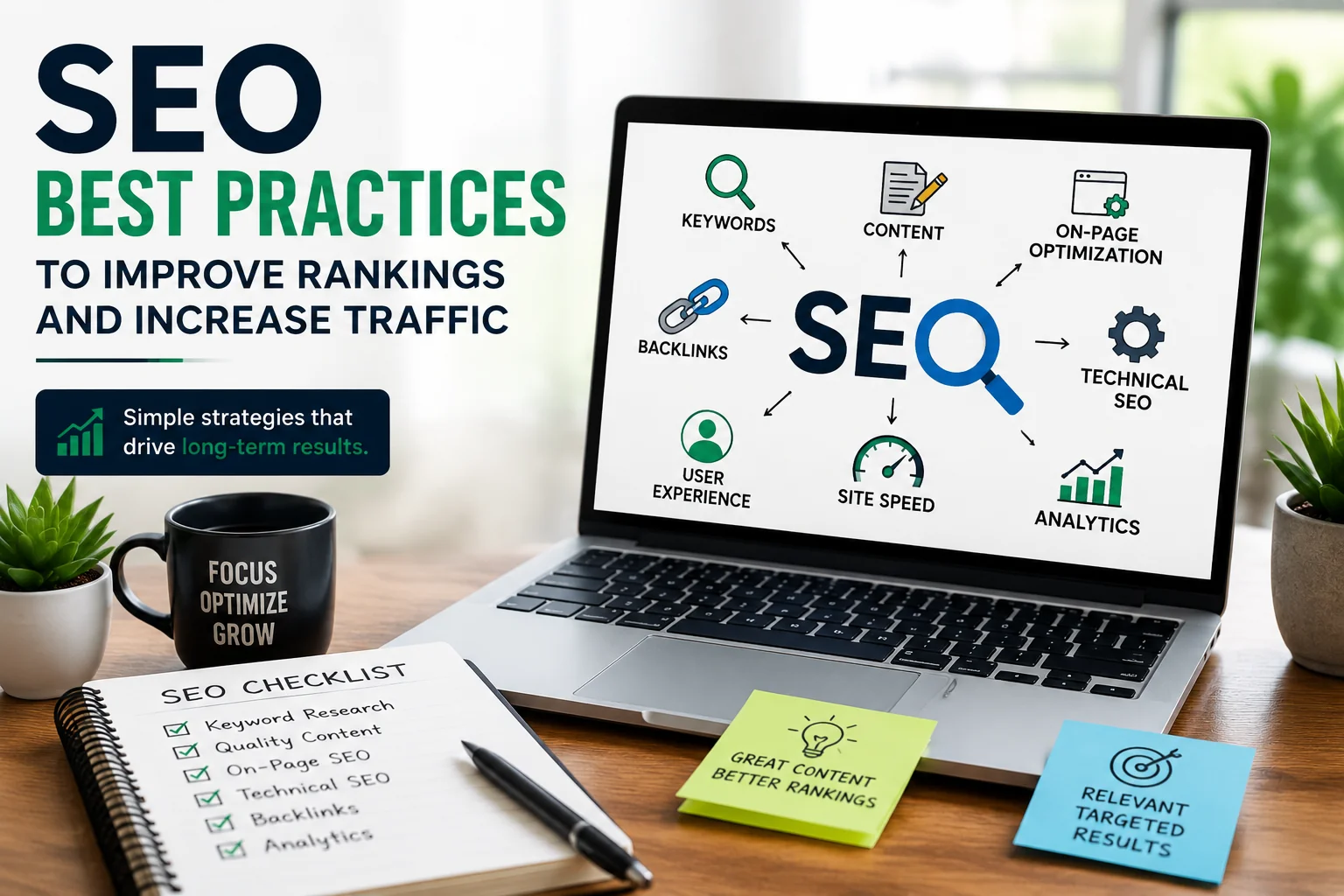
Every business wants to appear where customers are searching. Search engines have become one of the most important ways people discover products, services, and solutions.
Search Engine Optimization (SEO) helps businesses improve their website visibility and attract visitors who are actively looking for what they offer.
A successful SEO strategy focuses on creating a better website experience while helping search engines understand your content.
1. Research The Right Keywords
Keywords are the foundation of SEO. They help businesses understand what their audience is searching for.
Effective keyword research helps identify:
- Customer needs
- Search intent
- Competition levels
- Content opportunities
Using the right keywords throughout your website helps search engines connect your pages with relevant searches.
2. Create High-Quality Content
Search engines prioritize content that provides value to users.
Quality content should:
- Answer customer questions
- Provide useful information
- Be easy to understand
- Include relevant keywords naturally
Consistently publishing helpful content can improve website authority and attract more visitors.
3. Optimize Website Pages
On-page SEO improves how search engines understand your website.
Important optimization areas include:
- Page titles
- Meta descriptions
- Heading structure
- Image optimization
- Internal linking
Small improvements across website pages can create significant ranking benefits.
4. Improve Website Speed
Website performance affects both rankings and user experience.
A slow website can cause visitors to leave before exploring your content.
Businesses should focus on:
- Faster loading times
- Optimized images
- Clean website structure
- Reliable hosting
5. Build Quality Backlinks
Backlinks from trusted websites help improve your website authority.
Strong backlink strategies include:
- Industry partnerships
- Guest content
- Digital PR
- Valuable resources
Quality is more important than quantity when building links.
6. Focus On Local SEO
For local businesses, appearing in nearby searches is essential.
Local SEO includes:
- Optimizing business profiles
- Maintaining accurate information
- Collecting customer reviews
- Creating location-focused content
This helps businesses connect with customers searching nearby.
7. Monitor SEO Performance
SEO requires continuous improvement.
Regular tracking helps identify:
- Ranking changes
- Traffic growth
- Website issues
- New opportunities
Analyzing results allows businesses to adjust strategies and improve performance.
Conclusion
SEO is a long-term strategy that helps businesses build visibility, attract qualified visitors, and create sustainable online growth.
By focusing on quality content, technical improvements, and user experience, businesses can develop a stronger presence in search results.